The BOOST Consortium
The BOOST consortium brings together 16 partners to build a practical bridge between research excellence and innovation outcomes, with a clear focus on Widening ecosystems. It includes 11 partners from Widening countries across 8 EU Member States, plus one partner from Bosnia and Herzegovina, extending the initiative beyond the EU while keeping it strongly rooted in regional realities.
The partnership mixes research-performing organisations and universities (e.g., Bulgarian Academy of Sciences, University of Nicosia, University of Thessaly, University of Porto, Polytechnic University of Bucharest, AUB Mediterraneo) with non-academic innovation actors (clusters, accelerators, venture and support organisations such as Cleantech Bulgaria, CSI Cyprus, Corallia, RoHealth, Fast Track Ventures, plus other ecosystem actors including AB Corporation, BeyondEU and Fondazione E. Amaldi).
At the international scale, IASP strengthens reach through its broader network of science parks and areas of innovation.
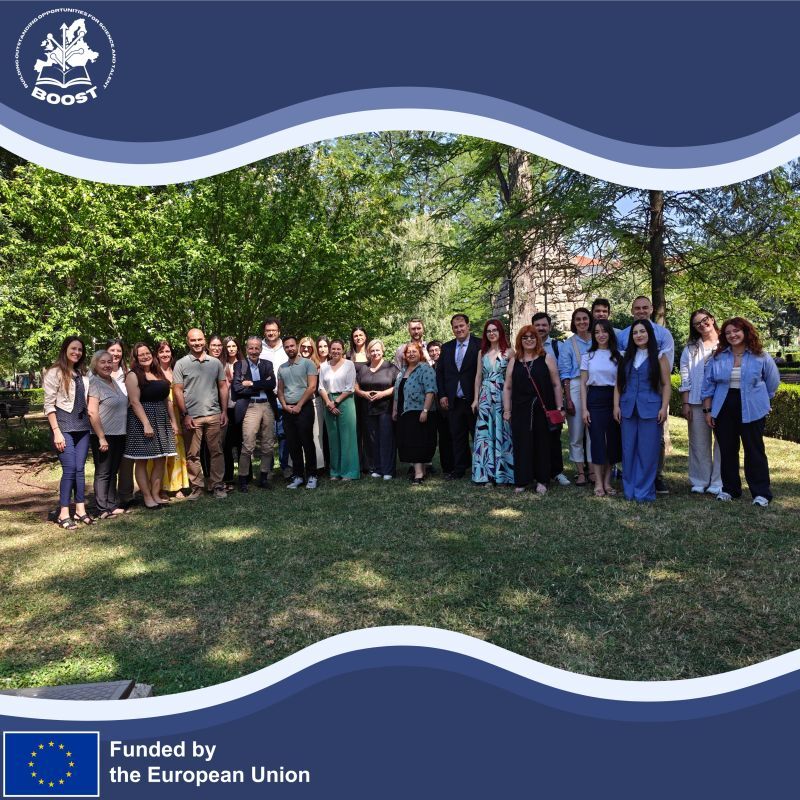
What makes the consortium work is the way these different actors complement each other: academic partners anchor the programme in research talent and institutional capacity, while non-academic partners contribute acceleration, incubation, services, and stronger links to labour markets and innovation networks.
The consortium’s delivery approach is built on lessons from prior projects, with an emphasis on context analysis, stakeholder involvement, validation before implementation, and structured monitoring and evaluation so the work stays grounded and improves over time.
It is also designed with inclusion as a real operating principle: more than 50% of the team is women, and BOOST targets at least 40% women among participating researchers.
Cleantech Bulgaria is the coordinator of the ARCOE project. Cleantech is a business network for sustainable development connecting key ecosystem stakeholders in working jointly on mutual complex challenges. Cleantech supports and focuses on the future of clean technologies and sustainable growth, while connecting businesses in support of the development of innovation and the formation of strategic partnerships in the fields of green business, the environment, science and education.
The Joint Innovation Centre (JIC) of the Bulgarian Academy of Sciences (BAS) is BAS’s coordination unit for innovation policy, intellectual property and patent activities, and project competence. It supports researchers and institutes by providing guidance on funding opportunities and helping prepare and implement projects under EU Structural Funds and Horizon Europe, while also building national and international business links to accelerate technology transfer and the commercialisation of applied research. JIC actively promotes “science to business” and “science to science” collaboration, including through its role as a partner in the Enterprise Europe Network, where it helps showcase research and connect it to transnational partners and joint projects.
Center for Social Innovation (CSI) is a Research and Development organization, which focuses on fostering social innovation that can bring about a positive change to local, national, regional, and global entities. These entities include but are not limited to governments, local administrative agencies, non-for-profit agencies, commercial entities, and educational institutions. The CSI team is composed of open-minded, fully equipped researchers, entrepreneurs, project managers, trainers, and Information Technology specialists.
The American University of Beirut Mediterraneo (AUB Mediterraneo ) is a private, independent, non-sectarian university in Beirut, founded in 1866 and operating under a charter from the State of New York, with an educational approach rooted in the American liberal arts model. AUB is a teaching-centered research university with over 8,000 students, a strong emphasis on freedom of thought and expression, and a mission to advance knowledge through research while serving the peoples of the Middle East and beyond. It is institutionally accredited by the Middle States Commission on Higher Education (MSCHE) and offers a wide range of bachelor’s, master’s, MD, and PhD programs across its faculties, with English as the main language of instruction.
Educational Excellence Corporation Limited — commonly known as the University of Nicosia (UNIC) — is Cyprus’s largest private university and a leading English-language institution in Southeastern Europe. Founded in 1980 as Intercollege and granted university status in 2007, UNIC now operates modern campuses in Nicosia, Limassol, and Larnaca, serving over 14,000 students from more than 100 countries, supported by around 550 academic and administrative staff across eight Schools.

Corallia, founded in 2005 as a Unit of Athena Research Center, is an incubator, accelerator and multi-cluster facilitator that has played a key role in the development of the Greek startup ecosystem and considered as one of the main pillars of the European innovation ecosystem. Its activities cover the entire entrepreneurial trip, from its very beginnings to its acceleration, growth, internationalisation and integration with the ecosystem. In addition to the coordination of two innovation clusters in the fields of space technologies and gaming/creative industries, Corallia implements multiple business-support initiatives to strengthen innovation, youth entrepreneurship and regional development and cultivates European and international partnerships with the aim of networking and internationalising Greek businesses in their main markets but also creating new value chains between different sectors of the Greek economy, promoting innovation throughout Europe.

The University of Thessaly (UTH) is a public university in central Greece, founded in 1984 by Presidential Decree, with Volos designated as its central location. It operates as a genuinely multi-campus institution across Volos, Larissa, Karditsa, Trikala, and Lamia, bringing together diverse academic communities across the Thessaly region. UTH places strong emphasis on outward-looking education and research, describing internationalisation as a core part of its identity and aligning its study programmes with international standards through the ECTS system.

AB Corporation specialises in enhancing project and programme environments, crafting bespoke corporate strategies to achieve organizational goals. Renowned for their exceptional success in writing EU-funded projects, AB Corporation offer comprehensive services in EU Project Writing and Management, EU Affairs & Advocacy, Training in EU Funds & European Affairs.

BeyondEU is a consultancy that helps organisations secure funding for innovation and internationalisation projects, with a strong hands-on focus on opportunity scanning, proposal development, and submission support. In practice, BeyondEU positions itself as a partner that stays alongside clients from the first identification of relevant calls through to a fundable application, combining consulting support with proficient proposal writing to help projects move from idea to approved funding and international growth.
E. Amaldi Foundation (FEA) is the coordinator of the ARCOE project. FEA is the new Italian model for applied research, technology transfer and the promotion and support of the national scientific heritage. The primary objective of FEA is to promote and support scientific research aimed at technology transfer, starting from the space sector, as a fundamental driver for the economic development of Italy and as a source of innovation to improve competitiveness, productivity and employment.
International Burch University (IBU) is a private university based in Ilidža (Sarajevo), Bosnia and Herzegovina, established in 2008, with a strong international and practice-oriented profile. IBU is owned by Stirling Education (headquartered in London) and organises its academic offer across three main faculties, including Engineering and Natural Sciences, Economics and Social Sciences, and Education and Humanities. Guided by an entrepreneurial university model, IBU emphasises innovation, opportunity creation, and the development of applied and transferable skills alongside academic learning.

FASTTRACK VENTURES, Lda. is a Lisbon-based innovation and investment-readiness actor that helps startups scale through acceleration programmes, mentoring and coaching, fundraising support, and investor matchmaking, with a strong footprint in EU-funded innovation initiatives. Across its activities, Fasttrack reports having supported 1,700+ startups, managed €45M+ in grants, and funded 160+ startups, combining hands-on growth support with deep experience in building cross-border collaborations and connecting ventures to investors and ecosystem partners.

The University of Porto (U.Porto) is one of Portugal’s leading teaching and research institutions, officially established on 22 March 1911 and embedded across the city of Porto through three main campuses (City Centre, Asprela and Campo Alegre), plus additional sites in the region. Today, U.Porto brings together 14 faculties and one business school, supported by 48 research units and a large academic community, with around 35,800 registered students. With a strong culture of excellence and societal engagement, the university positions research and innovation as a core mission, contributing significantly to Portugal’s scientific output and connecting knowledge creation to economic, social, and cultural value.
ROHEALTH – Clusterul pentru Sănătate și Bioeconomie is a Romanian non‑profit innovation hub founded in 2015, uniting over 80 organizations, including SMEs, startups/spin‑offs, universities, hospitals and public authorities, with a shared mission to elevate Romania’s health and bioeconomy sectors through research-driven collaboration and competitive excellence LinkedIn. Supported by seven thematic working groups, the cluster provides structured access to funding programmes, operating brokerage events, expert training, start‑up mentoring, IP and regulatory support, and strategic policy advocacy for its members.

The National University of Science and Technology POLITEHNICA Bucharest is Romania’s oldest and most prestigious engineering university, tracing its origins to 1818, when Gheorghe Lazăr established the first higher technical school teaching in Romanian in Bucharest. Today, POLITEHNICA Bucharest is organised into 15 faculties, with teaching and research activities spread across its major campus sites in Bucharest, and it positions itself as a leading hub for engineering education, research, and technological innovation with strong links to real-world application. In 2023, the institution expanded its national role by merging with the University of Pitești, adopting its current nationwide identity as the National University of Science and Technology POLITEHNICA Bucharest.
The International Association of Science Parks and Areas of Innovation (IASP) is a global, membership-based non-profit NGO founded in 1984, created to connect and strengthen innovation ecosystems worldwide. Through its network of science and technology parks, innovation districts, and other “areas of innovation,” IASP helps members and their companies grow by expanding international connections, creating new business opportunities, increasing visibility, representing the sector in international forums, and supporting the development of new parks and innovation areas. IASP’s World Headquarters are in Málaga, Spain, with a branch office in Beijing, China, reflecting its role as a genuinely international platform for collaboration, knowledge exchange, and best-practice sharing across regions.